Giving way to pedestrians
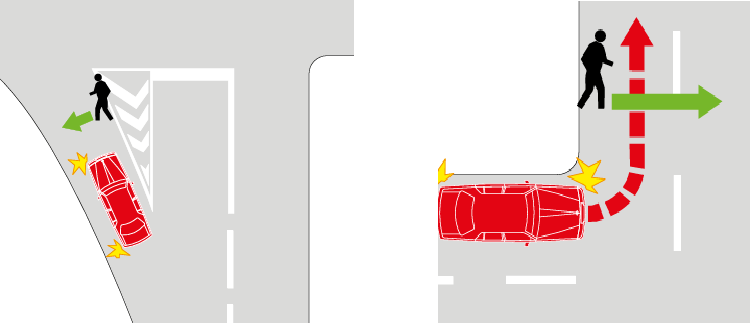
Pedestrians are especially vulnerable on the road because they have no protection in a crash, unlike drivers and passengers inside vehicles. Road rules are designed to keep them safe in a range of situations.
There are several times when drivers must give way to pedestrians:
At pedestrian crossings: You must give way to anyone on the crossing and must not overtake a vehicle that has stopped there. As you approach, travel at a speed that allows you to stop safely.
In slip lanes: Always give way to pedestrians using the slip lane.
At intersections: When turning left or right (except at roundabouts), give way to pedestrians crossing the road you are entering.
On footpaths: When entering or leaving the road via a driveway or nearby land, give way to pedestrians, as well as bicycles and other users on the footpath, path, or nature strip you cross.
In shared zones: Pedestrians have priority, so you must give way to them at all times.
When making a U-turn: You must give way to all pedestrians, as well as vehicles.
At Stop or Give Way signs (not at intersections): You must give way to pedestrians near or crossing at the sign or line, including those on shared or bicycle paths.
At tram stops: When a tram is stopped, you must stop behind it, give way to pedestrians crossing between the tram and the left side of the road, and wait until the doors are closed before moving on.


Proudly servicing Bendigo and surrounding areas, including Kangaroo Flat, Eaglehawk, Epsom, Huntly, Strathfieldsaye, Maiden Gully, and more.